

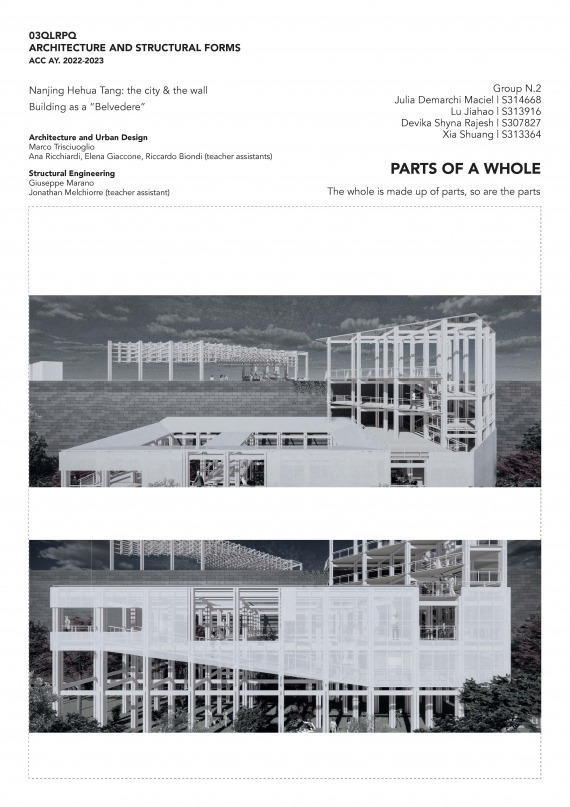
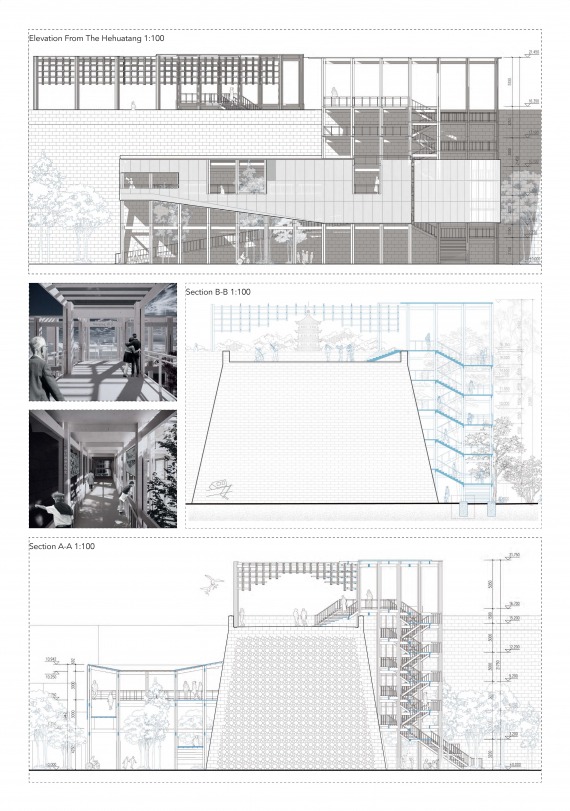
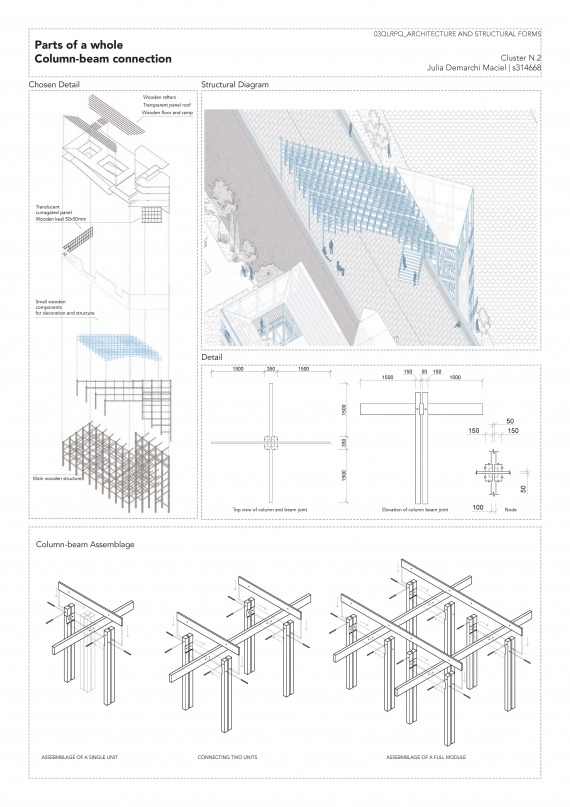
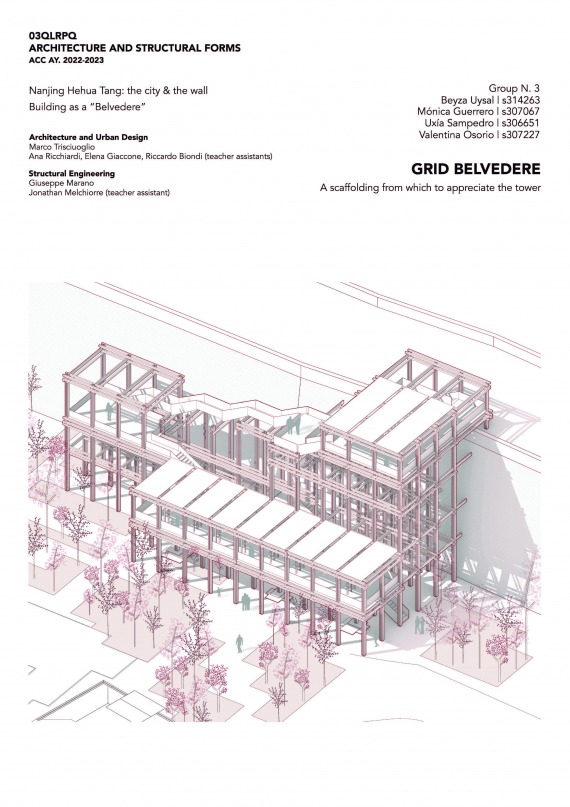
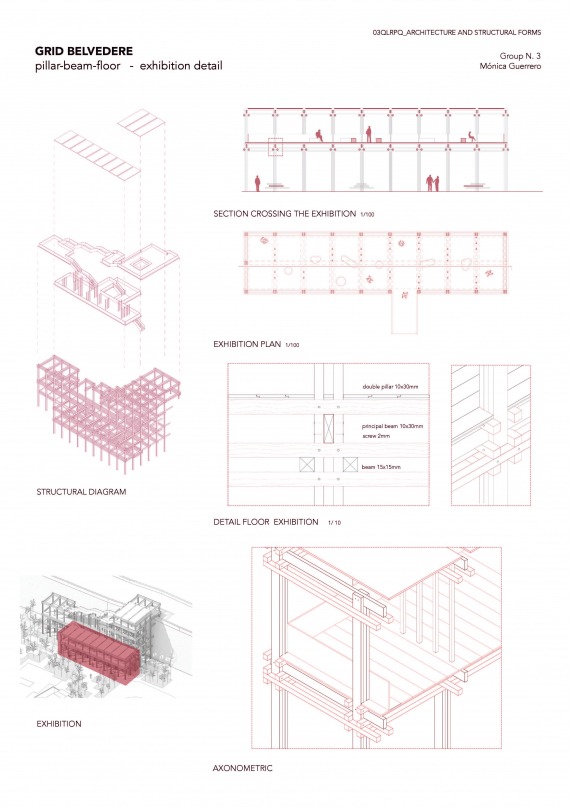
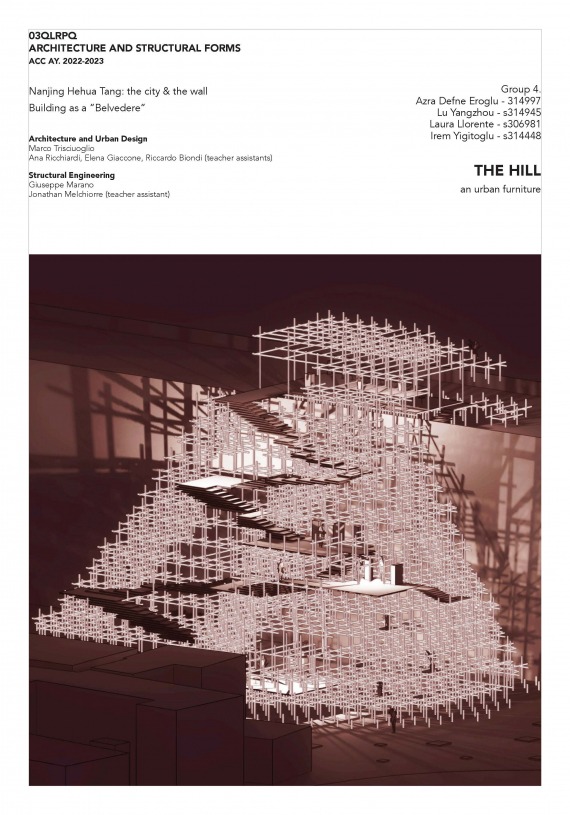
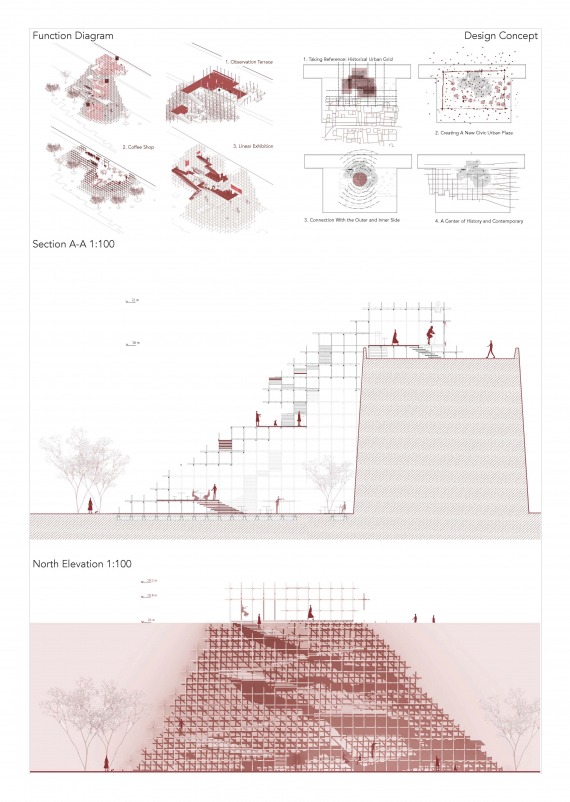
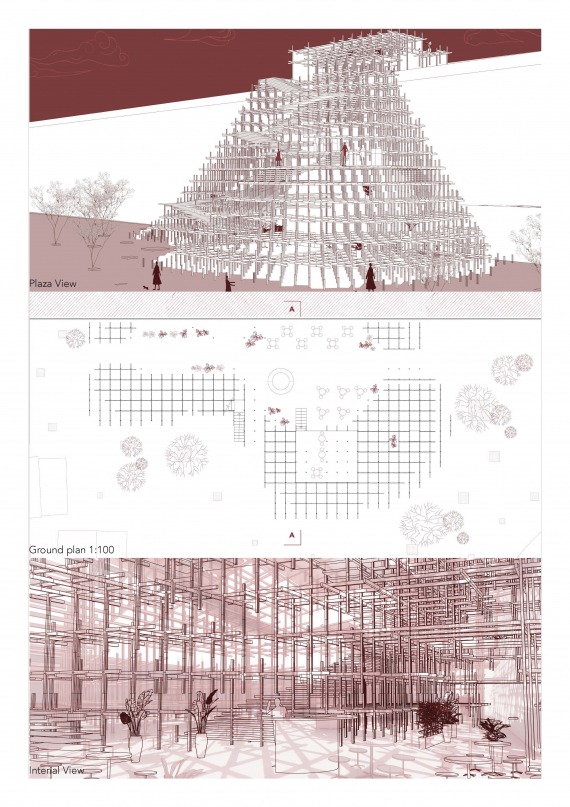
Tectonics. Experiments for/from an ancient site
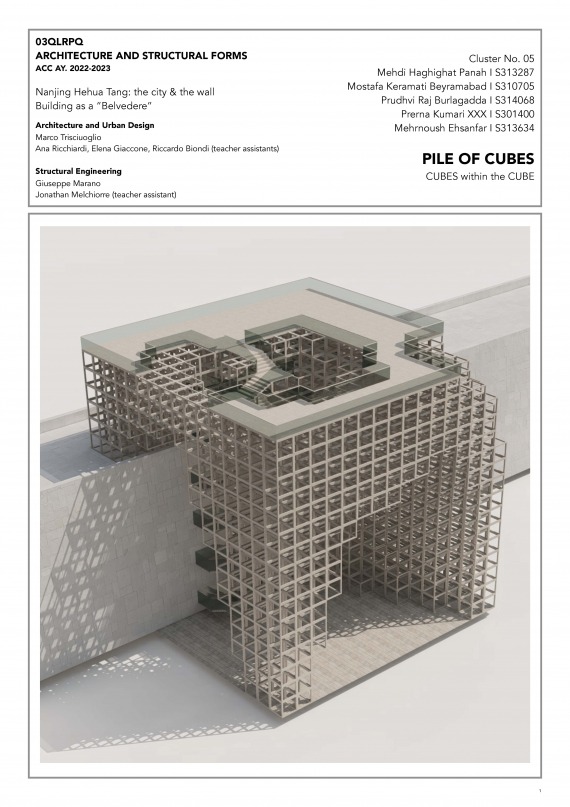
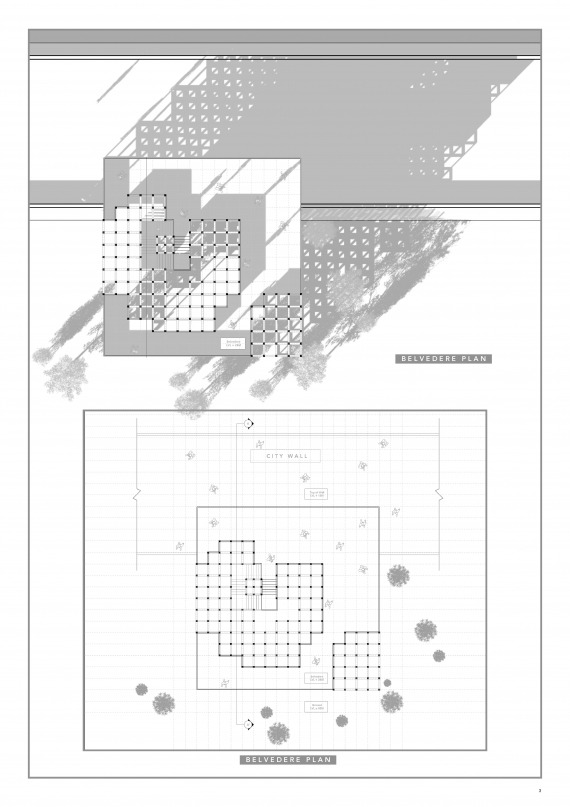
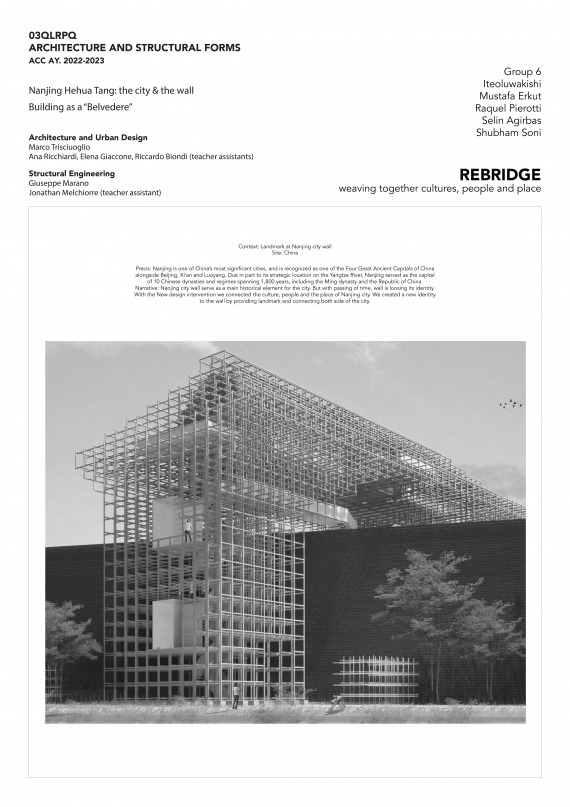
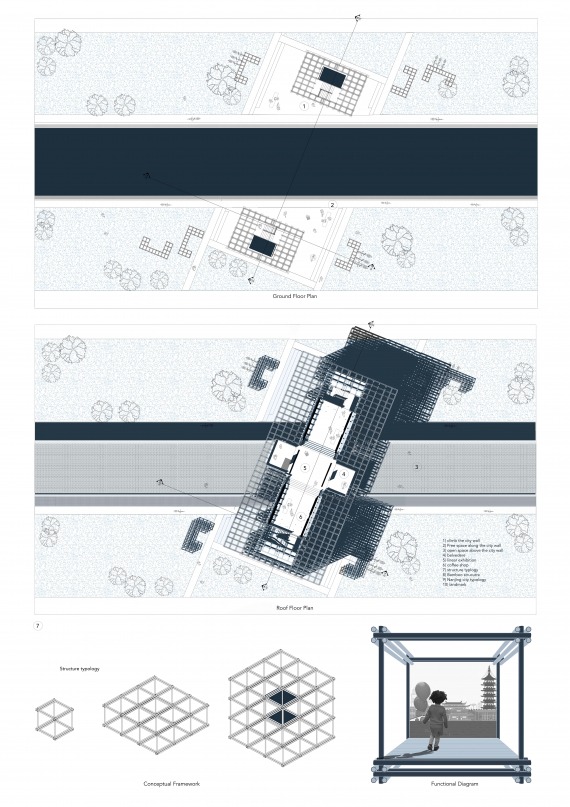
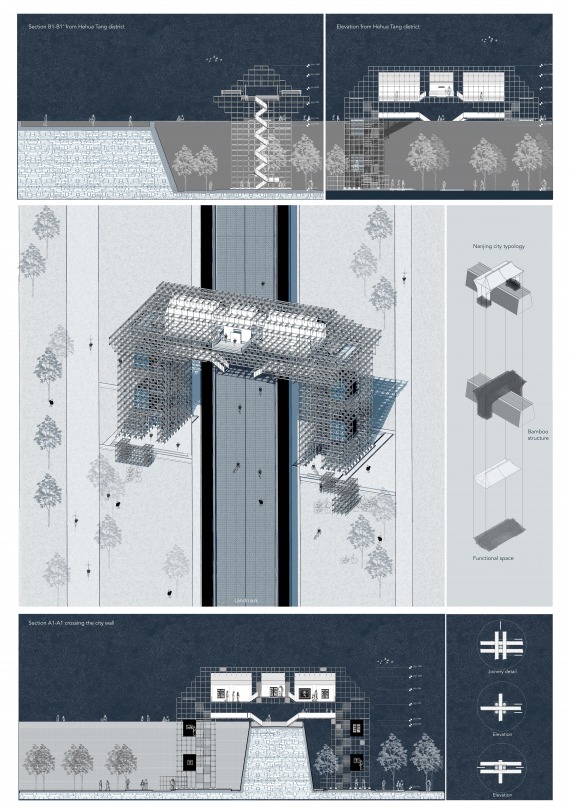
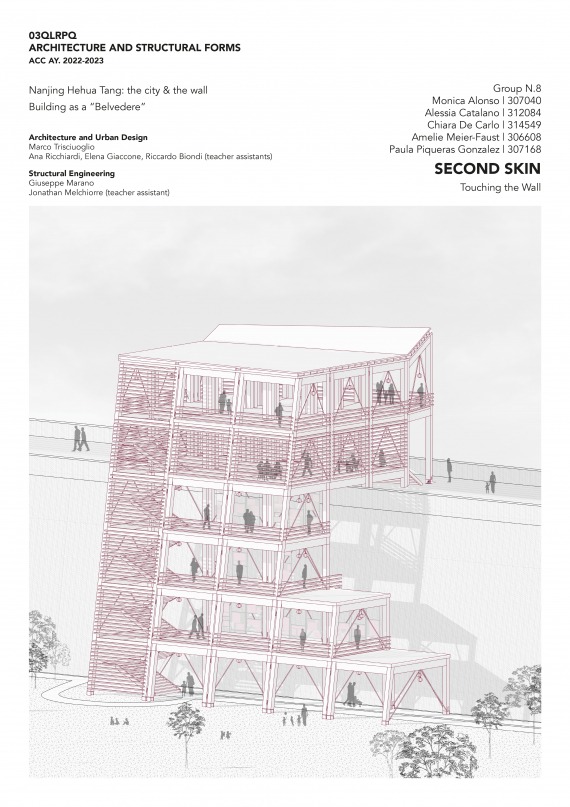
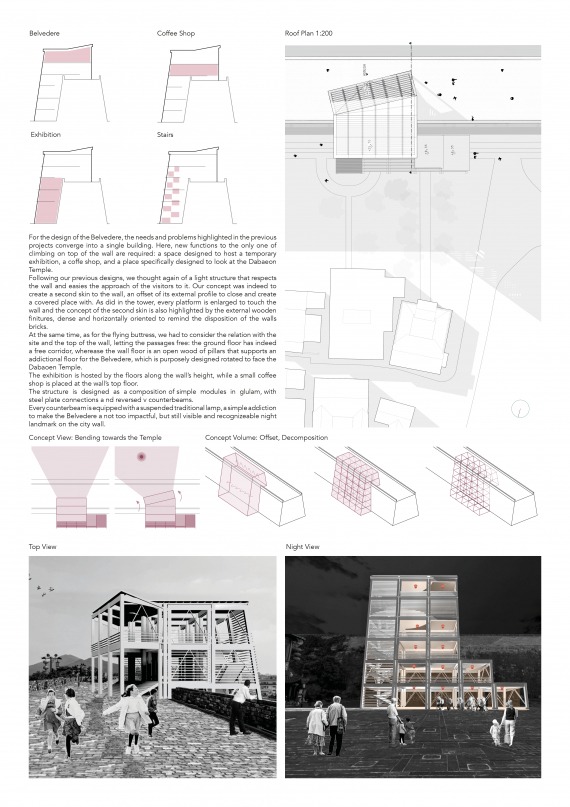
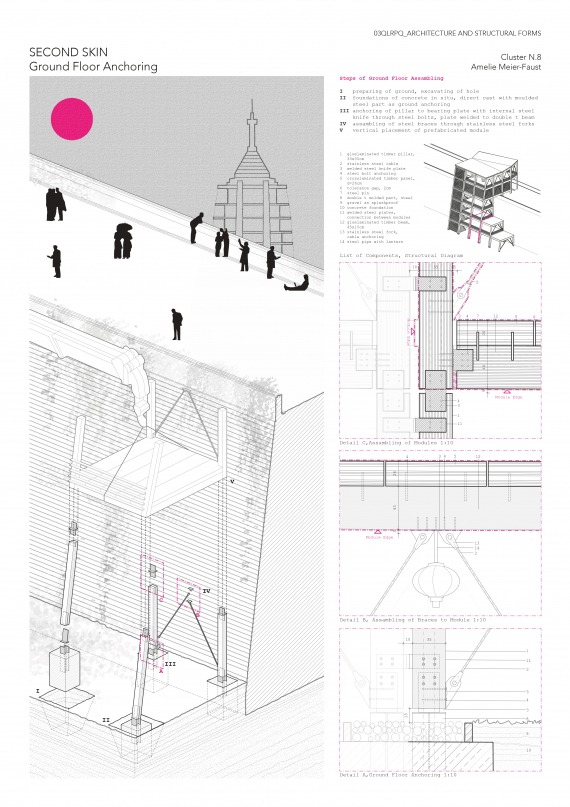
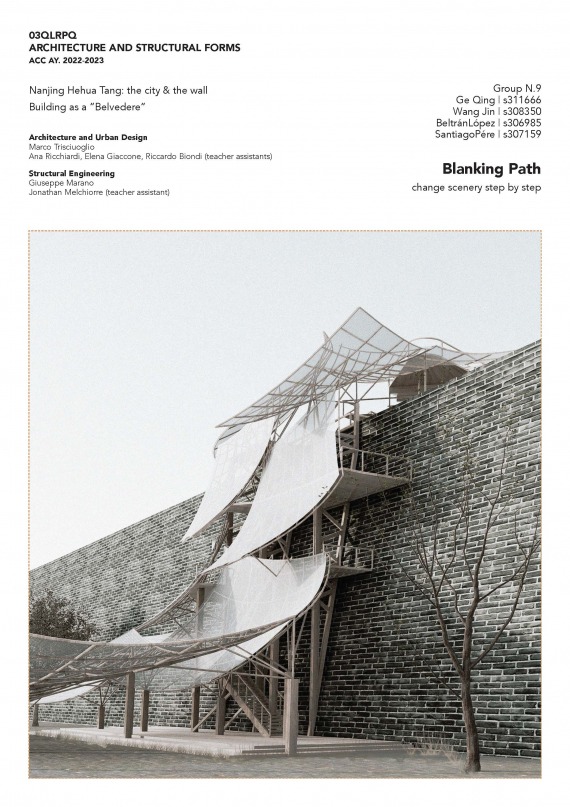
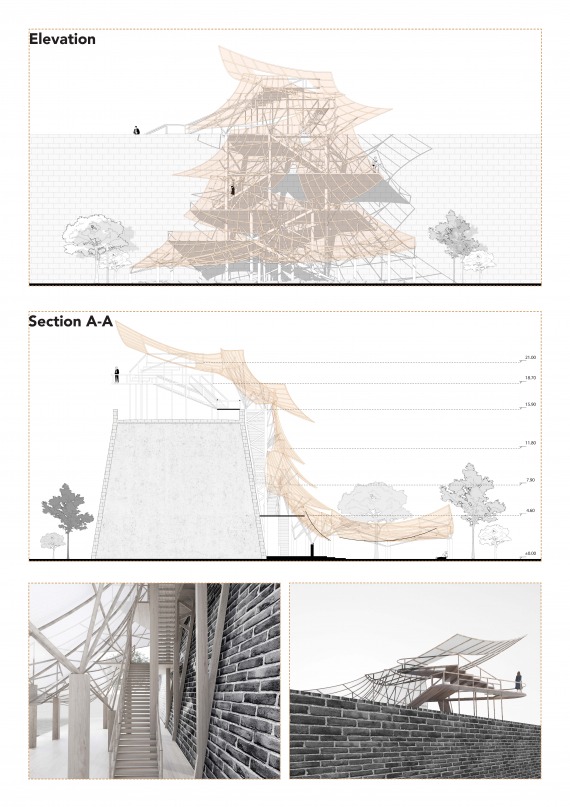
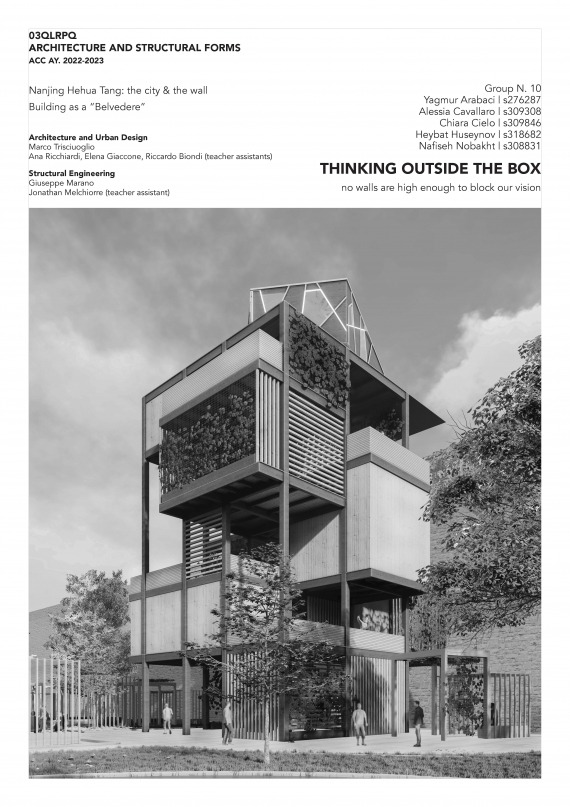
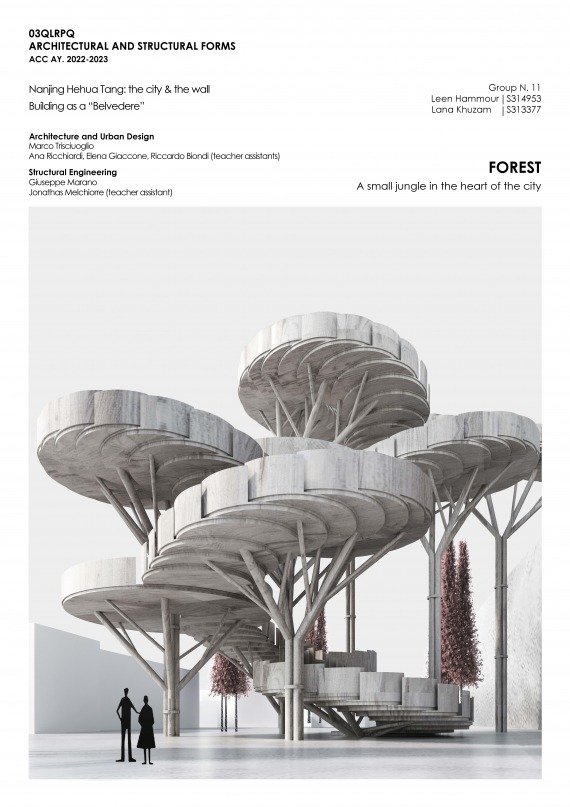
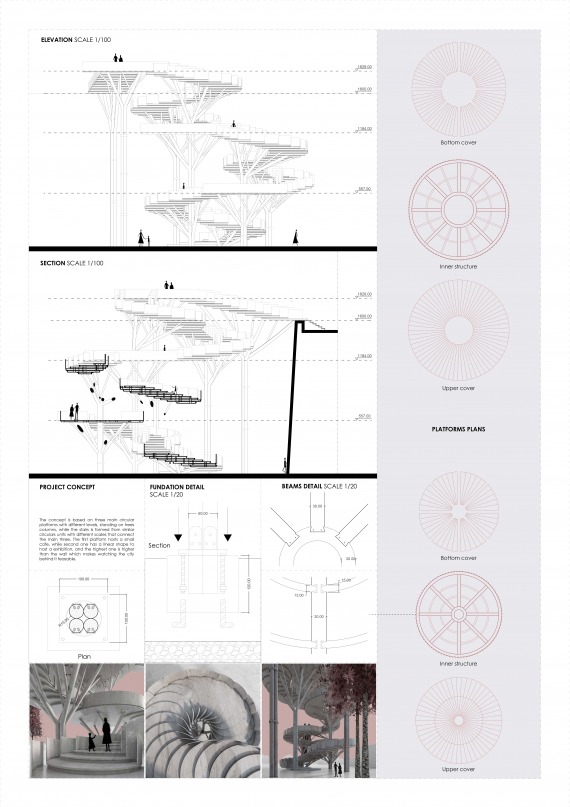
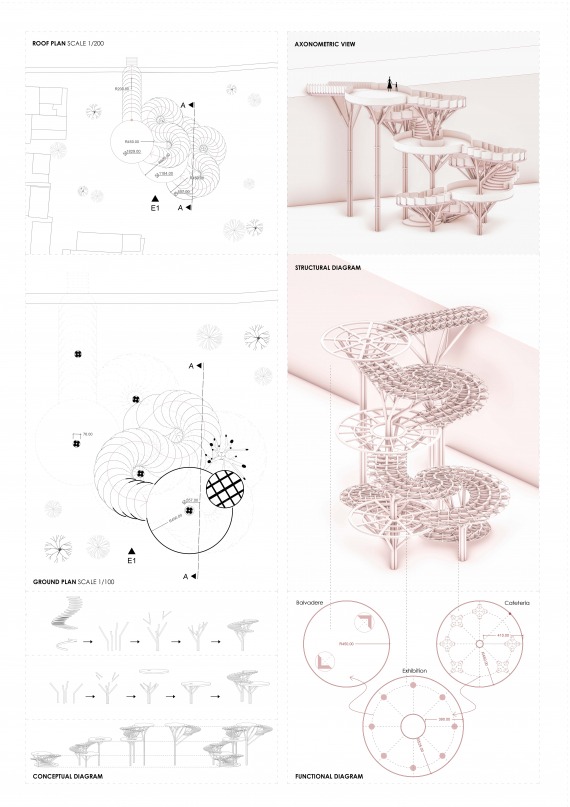
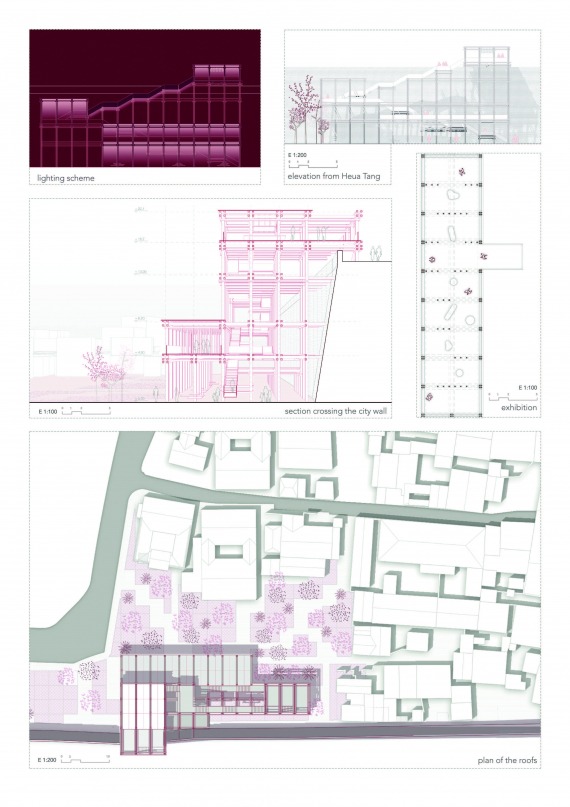
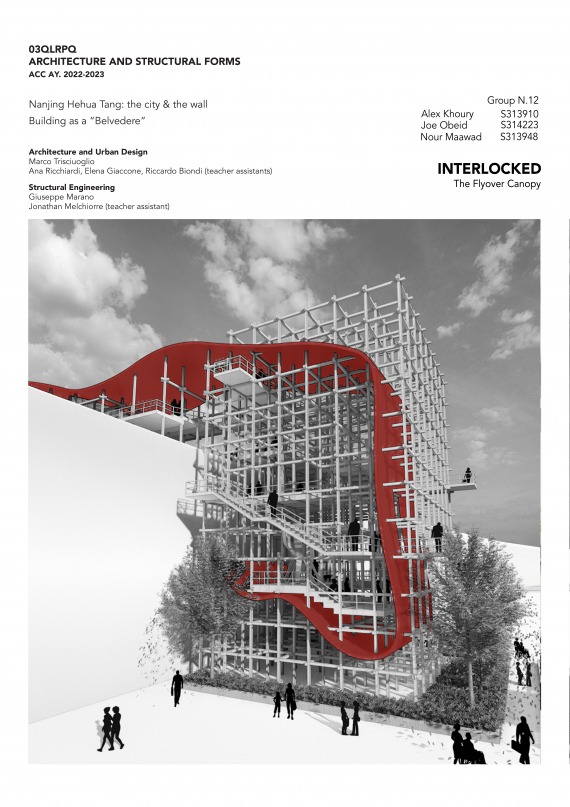
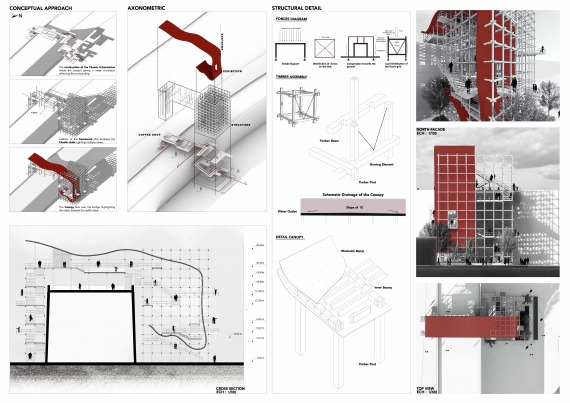
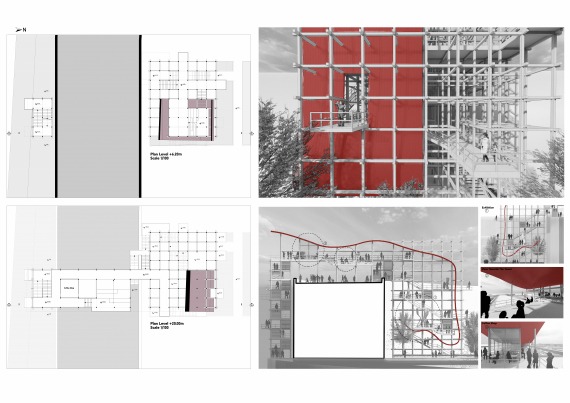
The Atelier is aimed at providing the students with the technical knowledge and the practical skills to manage design process, starting from simple but significate examples to finally deal with real complex cases, mainly focused on building in a historical context. The final theme is the project of a light infrastructure (foot-bridge, tower), to be planned in archaeological/historical site anduseful to improve the connection between different areas for visiting: the City Wall of Nanjing, within Qinhuai District, Hehua Tang area. Working on the relationships between a site occupied by ancient buildings and the complexity of contemporary design processes is a pretext to introducing, together with the idea of Typology and Topography in design, over all the idea of Tectonics, as well as the interplay of the three ideas and their development in time in practical design actions. The Atelier results from the close cooperation between two professors involved in researching and teaching activities in China (in Fujian University in Fuzhou as well as in Southeast University in Nanjing). In that Country, the idea of protecting and preserving old sites and old artifacts is recent, often in conflict with the continuous aiming to innovation of architecture and its restless caring tradition and memories. In contemporary architecture, light infrastructures are often the meeting design question between the engineering and architectural expertise, gathering morphological and structural issues. Specific role has been given to the impact of design decisions in the final results: constructive systems and structural typologies will be evaluated in their capability to face the specific design problem.
Three main aspects were the core of the design activities:
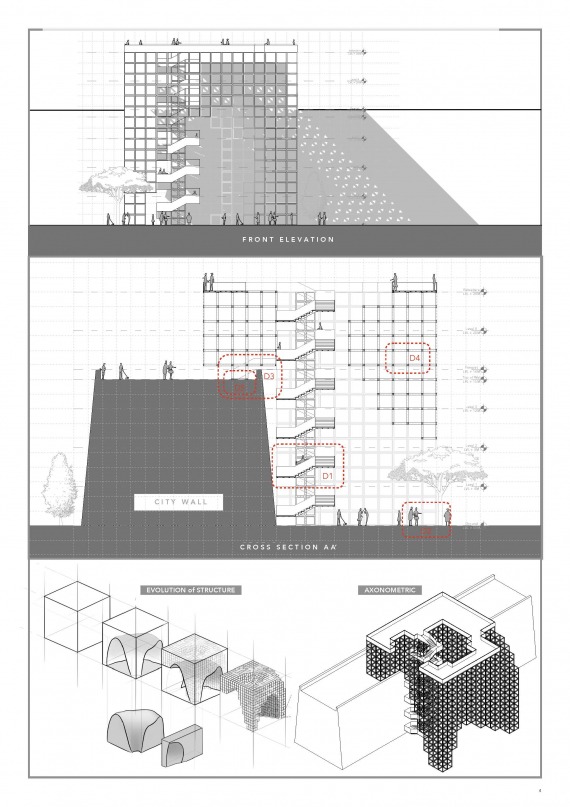
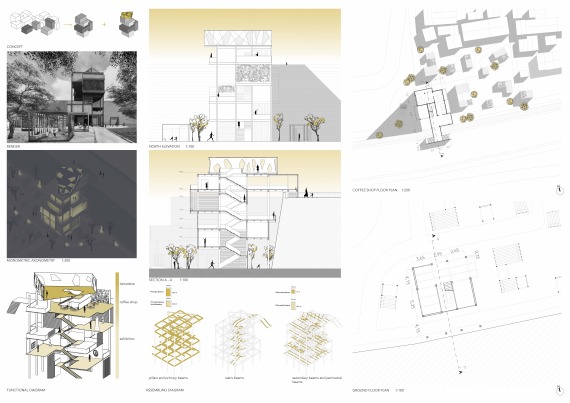
• the conception of a simple object (for a complex context) in its dimension, skeleton/structural system, materials and technical plants;
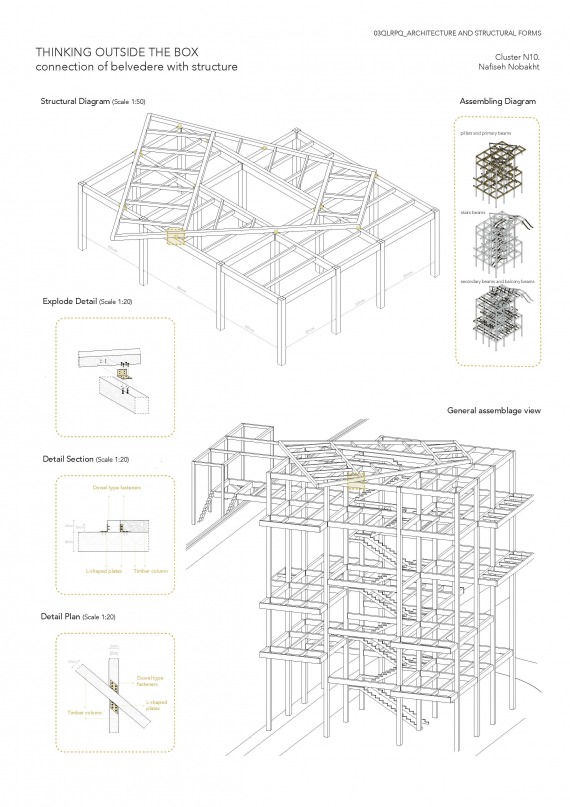
• the experimental comparison among structural systems in order to identify the one that maximize the functional needs;
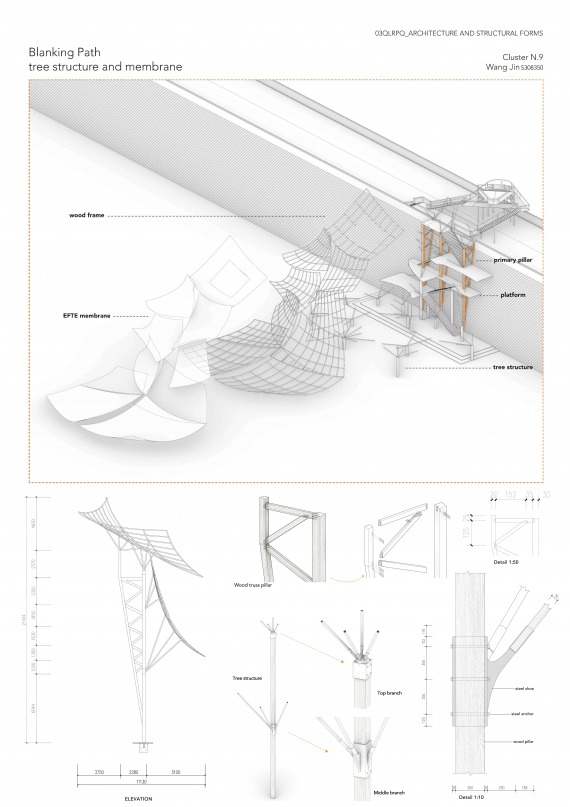
• the role of structural choices (and constructive detail, too) in expressing the form of the simple object and its own relationship with the site: structural shape definition for different structural configurations.